


PROTEGO®
Pressure and Vacuum Relief Valves

Reliable Tank Protection and Emission Reduction
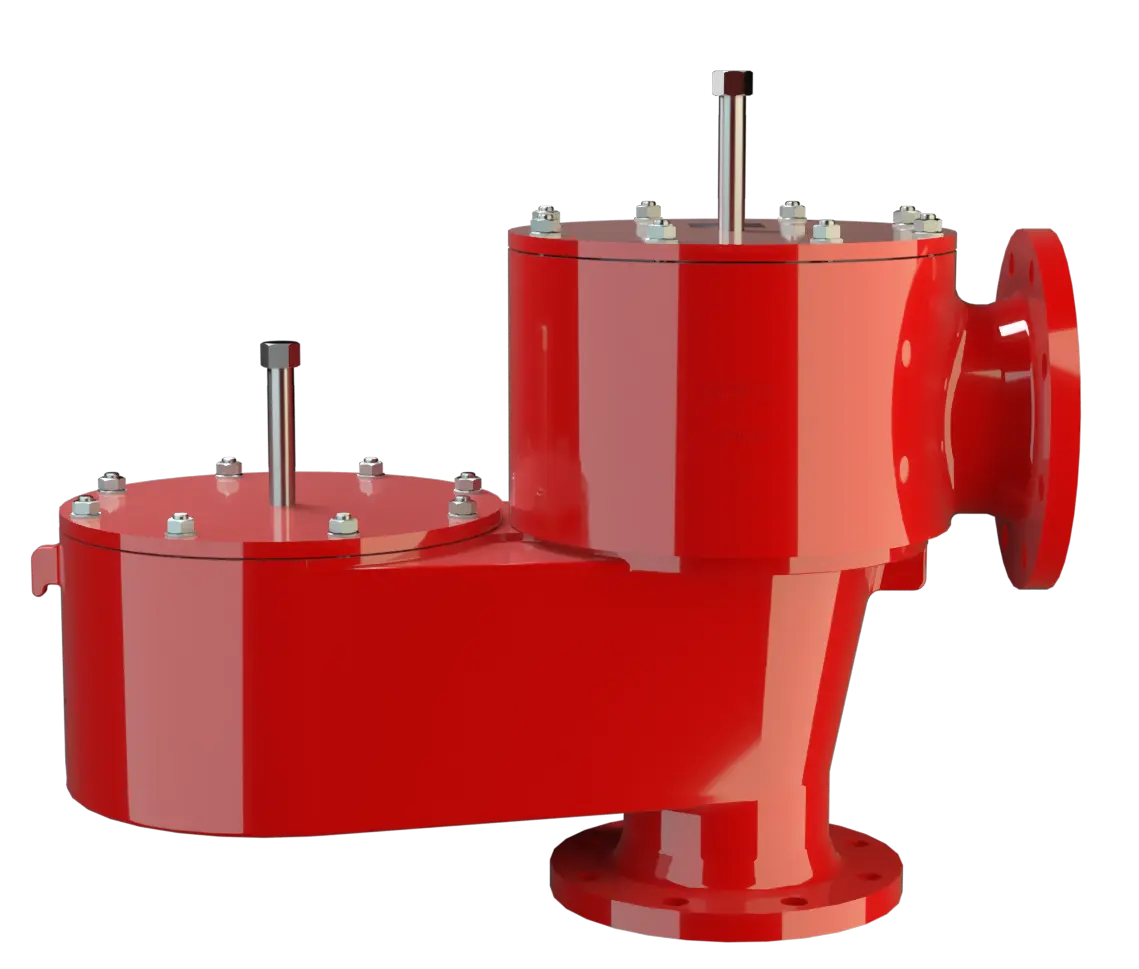
PROTEGO® Pressure and Vacuum Relief Valves Pressure and vacuum relief valve A pressure and vacuum relief valve is a pressure equalization valve for impermissible pressure and vacuum in a closed system. are designed to protect tanks, vessels, and process equipment Equipment Machines, appliances, fixed or mobile devices, control parts and accessories, and warning and prevention systems, whether separate or combined, intended for the generation, transfer, storage, measurement, control, and conversion of energy, and for the processing of materials, which have their own potential source of ignition and may cause an explosion. from both pressure Pressure (gauge pressure) Pressure for which the value is equal to the algebraic difference between the absolute pressure and the atmospheric pressure. and vacuum Vacuum Vacuum is the pressure in an enclosed space that is lower than the ambient pressure. conditions.
During normal operation, storage tanks and process systems are exposed to pressure fluctuations caused by filling, emptying, thermal expansion, or operational changes. Without controlled venting, these fluctuations of pressure can lead to tank structural damage, product Product Includes equipment, protective systems, devices, components and combinations of these. loss via unwanted emissions, and safety risks. PROTEGO® Conservation Vents are available as pressure relief valves, vacuum relief valves, or as combined pressure/vacuum relief valves Pressure/vacuum relief valve Pressure/vacuum relief valve is an umbrella term that includes pressure or vacuum relief valve as well as pressure and vacuum relief valve. .


Highlights of PROTEGO® Breather Valves
PROTEGO® 10% Technology and Tight Sealing
During normal operation, the valve pallet Valve pallet Valve pallet is the generic term for the assembly that rests on the valve seat. stays closed and seals the system. Pressure Relief Valves prevent vapor loss until shortly before the set pressure Set pressure Set pressure is the gauge pressure at the device inlet at which the relief device is set to start opening under service conditions. is reached, while Vacuum Relief Valves prevent air from entering until the defined vacuum level is reached.
Once the set pressure is exceeded, the valve begins to open. PROTEGO® Valves reach full lift Lift Lift is the actual travel of the valve pallet from the main valve out of the closed position. within 10% overpressure Overpressure Overpressure refers to an increase in pressure in a system or vessel above the normal operating pressure. , this allows the valve to be set close to the allowable tank pressure Tank pressure Tank pressure is the pressure within a tank. while achieving the required flow safely without exceeding tank MAWP Maximum allowable working pressure (MAWP) Maximum gauge pressure permissible at the top of a completed vessel in its normal operating position at the designated coincident temperature specified for that pressure. . This reduces unnecessary emissions compared to conventional valves that require significantly higher overpressure accumulation Accumulation Pressure increase over the MAWP of the vessel allowed during discharge through the pressure-relief device. to fully open.
The sealing between the valve pallet and the valve seat Valve seat The valve seat is a component on which the valve pallet rests when the valve is closed. is provided by an FEP air cushion seal Seal A seal prevents or limits unwanted transfer of product from one container to another. Seal is used as superordinate term for all types of sealing elements. , a PTFE seal or, precision engineered metalic sealing technology optimized for seat tightness and in service durability. Depending on the set pressure, storage temperature or stored media, PROTEGO® can offer a comprehensive range of sealing technology solutions engineered for each individual application. The tightness of the PROTEGO® Valves is far above the normal standard (API 2000 or EN ISO 28300) and meets the stringent demands of emission control regulations.

The PROTEGO® valves demonstrated outstanding zero-emission performance and helped us achieve the environmental standards required for our site.
Application Examples for PROTEGO® Breather Valves


We provide engineered safety solutions.
Since 1954, PROTEGO® has built and provided Flame Arresters Flame arrester Device fitted to the opening of an enclosure, or to the connecting pipe work of a system of enclosures, and whose intended function is to allow flow but prevent the transmission of a flame. , Pressure and Vacuum Relief Valves and Tank Equipment, now with the help of more than 750 employees worldwide.
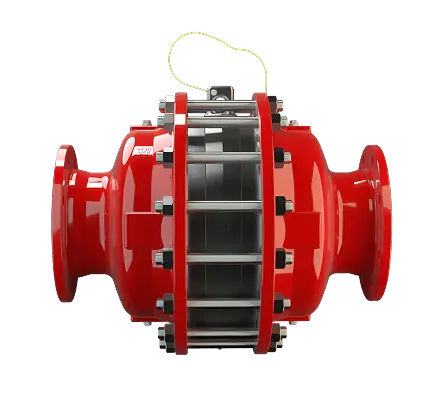

Engineering and Compliance
Correct valve selection is critical for safe and effective operation. Key selection criteria include:
Valve sizing is based on required volume flow and maximum allowable pressure. Published certified volume flow diagrams are available to support design.
Sizing must also account for:
Key Features and Design Characteristics
The valve reaches full lift within 10% pressure accumulation. This allows for a valve set pressure close to tank design pressure Design pressure Design pressure is the maximum pressure for which the system or component was designed for continuous usage. , improving pressure control efficiency and reducing product losses when compared to conventional pressure / vacuum valve designs.
PROTEGO® Valves are designed and produced with industry leading sealing technology providing seat tightness which by far exceed the requirements of international standards, helping to optimize efficiency and reduce storage tank emissions.
The PROTEGO® Valve opens later and re-seats earlier than conventional valves. This reduces the loss of product or inert gas Inert gas Non-flammable gas which will not support combustion and does not react to produce a flammable gas. and lowers emissions.
Large volume flows are achieved with only a small pressure difference. This supports efficient venting and can reduce the need for larger valve sizes.
The valve pallet is guided within the housing Housing A housing is a solid shell, which surrounds a content, either protecting the content from external influences, or protecting the environment from the content. . This protects internal components from environmental exposure and supports consistent operation.
The valve design allows for straightforward maintenance Maintenance Combination of all technical and administrative actions, including supervision actions, intended to maintain or restore a unit in working order. , supporting long-term operation efficiency.
The valves are suitable for use in explosion Explosion Abrupt oxidation or decomposition reaction producing an increase in temperature, pressure, or in both simultaneously. hazardous areas, supporting installation in regulated environments.


